Manuel Rey-Moreno y Manuel J. Sánchez‐Franco
Publicado en Psychology & Marketing, una revista internacional de alto impacto indexada en Scopus y en Web of Science (SSCI).
Palabras clave: Airbnb, turismo urbano, turismo de costa, economía colaborativa, minería de texto, análisis semántico, BERTopic
Resumen
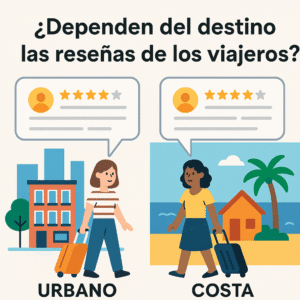
Este estudio, realizado por investigadores de la Universidad de Sevilla, explora si las opiniones que los viajeros dejan tras alojarse en un Airbnb varían dependiendo del tipo de destino: urbano o costero. Para ello, se analizaron más de 73.000 reseñas en inglés, publicadas entre 2017 y 2020 en cuatro ciudades representativas: Nueva York y Chicago (urbanas), y Hawai y Fort Lauderdale (de sol y playa).
El trabajo aplica técnicas avanzadas de procesamiento del lenguaje natural para detectar qué aspectos valoran más los huéspedes y cómo cambia esta percepción según el entorno. El resultado es una cartografía semántica que revela qué atributos influyen más en la satisfacción y la fidelidad de los usuarios según el tipo de destino.
Técnicas de análisis
-
Modelo BERTopic: sistema de modelado temático basado en inteligencia artificial, que permite agrupar comentarios en torno a temas latentes con significado propio.
-
Análisis de correspondencias: identifica asociaciones entre las temáticas detectadas y las ciudades analizadas.
-
Análisis de sentimientos: mide el tono (positivo o negativo) de las reseñas usando lexicones preentrenados (TextBlob).
Principales resultados y aportaciones
1. Los destinos urbanos y costeros generan reseñas muy distintas.
En las ciudades urbanas, los comentarios valoran la cercanía al transporte público y la comodidad del alojamiento. En cambio, en los destinos de costa, destacan más los elementos naturales como la vista al mar, la tranquilidad, las actividades al aire libre o la proximidad a la playa.
2. Se detectaron 14 grandes temas (metatopics) que agrupan las opiniones de los usuarios: desde limpieza, transporte, amenities del hogar, hasta interacción con el anfitrión o experiencias gastronómicas.
3. Algunos temas son transversales, como la calidad percibida del servicio o la relación de confianza con el anfitrión (lo que se ha llamado “ambiente hogareño”). Pero otros son muy específicos del entorno: por ejemplo, las vistas y el snorkel en Hawai, o la conectividad en metro en Nueva York.
4. El análisis de sentimientos confirma que las experiencias en destinos de playa suelen generar reseñas más positivas, especialmente cuando hay elementos recreativos o estéticos presentes (como piscina, atardeceres o deportes acuáticos). En contraste, las menciones a transporte urbano tienden a tener menor carga emocional positiva.
5. Los resultados permiten orientar a anfitriones y plataformas como Airbnb para mejorar sus descripciones y servicios en función del perfil del destino. También ofrecen información valiosa para organismos de turismo que quieran mejorar la experiencia de los viajeros.
Conclusiones
Este estudio demuestra que no basta con analizar las puntuaciones de los usuarios. Las opiniones escritas revelan patrones complejos y diferenciados según el entorno del alojamiento. En destinos urbanos, destacan la facilidad de acceso al transporte, la “caminabilidad”, el diseño del apartamento y su localización. En destinos costeros, priman las vistas al mar, la tranquilidad, las actividades recreativas (como snorkel o surf) y la autenticidad local.
Aplicando técnicas de inteligencia artificial, los investigadores han conseguido extraer conocimiento útil a gran escala que permite personalizar la oferta de alojamiento en función de los deseos reales de los huéspedes.
Además, el trabajo ofrece un enfoque novedoso al combinar métodos cuantitativos y cualitativos, lo que permite avanzar en el análisis de la experiencia turística digital. Una guía valiosa para anfitriones, plataformas colaborativas y destinos turísticos.
—————————————————————————————–
VERSIÓN INGLÉS
Do Travelers’ Reviews Depend on the Destination? An Analysis in Coastal and Urban Peer-to-Peer Lodgings
Manuel Rey Moreno and Manuel J. Sánchez‐Franco
University of Seville – Faculty of Business and Economics
Published in Psychology & Marketing, a high-impact international journal indexed in Scopus and Web of Science (SSCI), with a 2023 JCR impact factor of 3.8 (Q1 in Applied Psychology) and a 2023 SJR of 1.21 (Q1 in Marketing).
Keywords: Airbnb, urban tourism, coastal tourism, sharing economy, text mining, semantic analysis, BERTopic
Summary
This study by researchers from the University of Seville explores whether travelers’ reviews on Airbnb vary depending on the destination type—urban or coastal. To do this, the authors analyzed over 73,000 English-language reviews posted between 2017 and 2020 from four representative cities: New York and Chicago (urban) and Hawaii and Fort Lauderdale (coastal).
By applying advanced natural language processing techniques, the study identifies which features are most valued by guests and how these preferences differ based on the travel setting. The result is a semantic map that uncovers the key attributes shaping customer satisfaction and loyalty across different types of locations.
Methods Used
-
BERTopic modeling: An AI-based topic modeling method that detects latent themes in reviews and clusters them meaningfully.
-
Correspondence analysis: Used to match and visualize the relationship between detected topics and destination types.
-
Sentiment analysis: Performed using the TextBlob library to quantify review tone (positive or negative).
Key Findings and Contributions
1. Urban and coastal destinations elicit very different types of feedback.
In urban cities, guests highlight proximity to public transport and in-room amenities. In coastal destinations, the reviews focus more on natural beauty, tranquility, outdoor recreation, and beach access.
2. Fourteen major themes (metatopics) were identified across the dataset, including cleanliness, transport, home-like features, host interaction, and gastronomy.
3. Some topics are universal, such as trust in the host and overall satisfaction. But others are destination-specific—for example, guests in Hawaii emphasize sunsets and snorkeling, while those in New York praise subway access.
4. Sentiment analysis shows that coastal reviews tend to be more positive, especially when guests mention esthetic or recreational elements. On the contrary, mentions of transportation systems in urban areas often carry more neutral or negative tones.
5. These insights are useful for Airbnb hosts and platforms to better tailor their listings based on location type. The results are also valuable for tourism boards seeking to enhance destination appeal.
Conclusions
This study goes beyond rating stars. It reveals that the written experiences of travelers offer deep insights into what matters most—depending on whether they’re booking an urban apartment or a beachside cottage. In urban areas, users emphasized access to public transportation, walkability, apartment design, and proximity to attractions. In coastal locations, key themes included ocean views, peace and quiet, recreational beach activities (like snorkeling or surfing), and local authenticity.
By leveraging artificial intelligence, the researchers provide a scalable way to understand traveler sentiment, offering a valuable tool for improving service quality and destination marketing. This mixed-methods approach—combining semantic modeling and sentiment detection—sets a new standard for analyzing user-generated content in the tourism sector.
An essential roadmap for platforms, hosts, and tourism managers looking to personalize their offerings and better respond to travelers’ expectations.
Cada semana en SPOTIFY